Primo Unveils 7 New Trends in Real Estate Services Driven by Experience, Community, and ESG
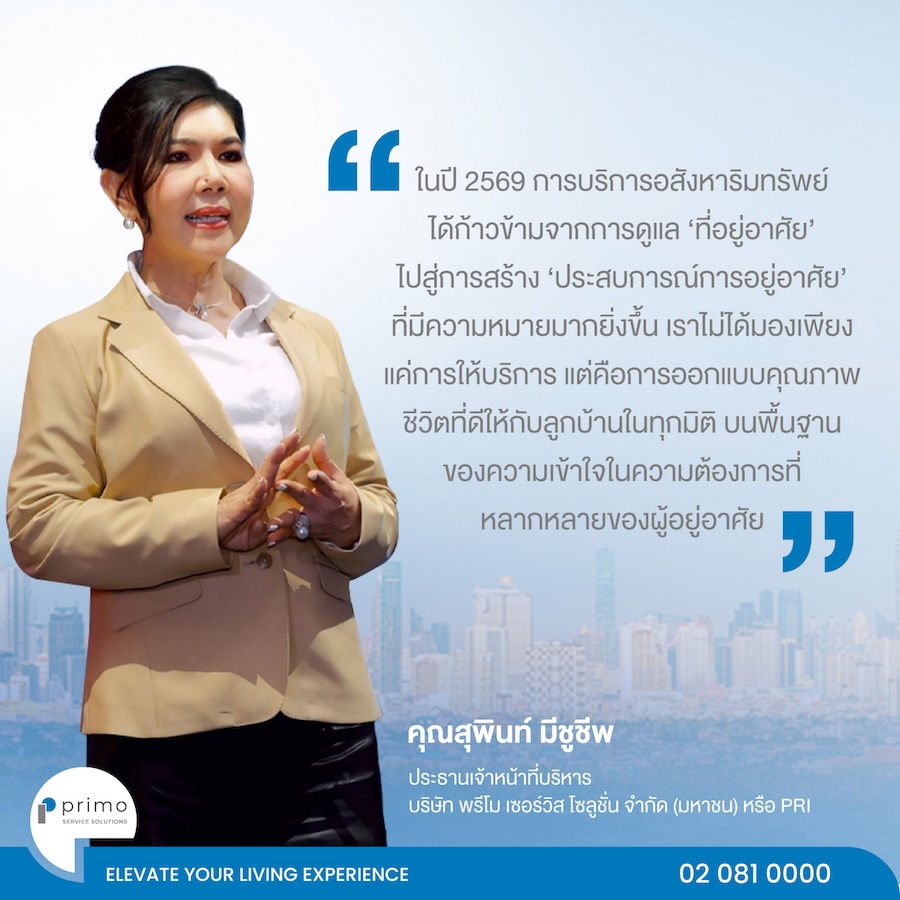
The real estate services in 2026 are driven by a deep understanding of living, aiming to enhance both the "experience" and "community" alongside sustainability concepts, reflected in 7 key trends that operators and project managers must pay attention to.Ms. Suphin Meechuchip, CEO of Primo Service Solution Public Company Limited (PRI), a leader in modern comprehensive real estate services, revealed that the current direction of property management has shifted to prioritize the "living experience" and "quality of life" of residents as the core focus. Service providers must understand the diverse needs of residents in each group and develop projects to be more than just housing but rather a "quality community" that meets lifestyle demands while operating sustainably according to the ESG concept to create long-term value for both residents and the business.
7 New Trends in Real Estate Services
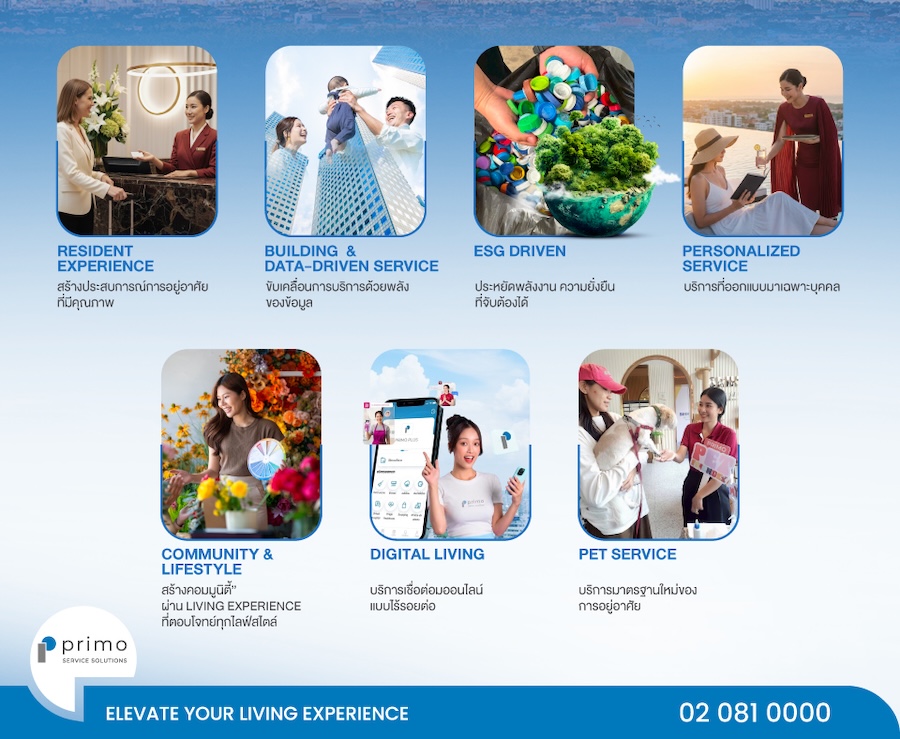
Current real estate services are driven by a "deep understanding of living" that not only aims to enhance the "living experience" of residents but also emphasizes creating a "quality community" that addresses all aspects of life, reflecting 7 important trends to watch in 2026 as follows:
1. Resident Experience Comes First. Residents are not just looking for a beautiful building or common areas; they expect a quality "living experience" such as quick repair notifications, fast chat responses, real-time issue reporting systems, and community activities that create vibrancy and make the project feel alive. This trend aligns with Primo's view that high-quality buildings must offer better amenities and user experiences.
2. Smart Building + Data-Driven Service. Project management will no longer rely solely on people and on-site experience but will increasingly use data to aid decision-making, such as monitoring energy usage, preventive maintenance, complaint management, and predictive facility care. Primo emphasizes the importance of integrating technology and real-time data as the backbone of modern property management.
3. ESG and Energy EfficiencyTangible Sustainability. In 2026, sustainability will be a fundamental principle of management leading to more practical daily service operations, such as energy management in buildings, waste separation, reducing utility costs, carbon measurement, and communicating results with co-owners/residents. Buildings with high ESG standards and improved energy efficiency will create a competitive business advantage.
4. Personalized Service. The trend in modern service will shift from a one-size-fits-all approach to services that cater to the differences among resident types, such as pet owners, remote workers, investors, seniors, or families with young children. Changing lifestyles will lead to more specialized services, such as pet-friendly services, concierge, home tech support, wellness programs, and community programs designed to meet the needs of each target group.
5. Community & Lifestyle: Quality Society Can Be Built. The role of property managers will shift from being "administrators" to "community builders" through designing living experiences that meet the lifestyle needs of residents, including creating activities for children, pets, health, learning, social activities, or CSR initiatives. The value of modern housing will depend on building relationships and a sense of belonging to the community, with amenity-led and experience-led asset management becoming more prevalent among project managers in the future.
6. Seamless Online-Offline Integrated Services. Residents will become more accustomed to using apps for booking common areas, paying fees, receiving packages, reporting issues, or getting project updates, prompting service providers to design a journey that connects digital and onsite services effectively, ensuring that the app genuinely simplifies life.
7. Pet Services: A New Standard for Living. The growing number of residents with pets means that housing projects must go beyond merely allowing pets to developing serious support services, such as designated pet areas, cleaning stations, clear regulations, staff trained in pet behavior, and activities designed for pet lovers. This trend makes pet-friendly residences not just a selling point but an integral part of the living experience that better meets residents' lifestyles, including pet concierge services and collaborations with veterinary hospitals and grooming services, as well as trained pet trainers dedicated to serving residents in pet-friendly projects.
Designing the resident experience through the ESG concept and continuous service development that Primo has always committed to, under the Transformation Era plan, has become the new standard for property management that not only enhances service efficiency and reduces costs but also aims to elevate the quality of "better living" for residents sustainably.